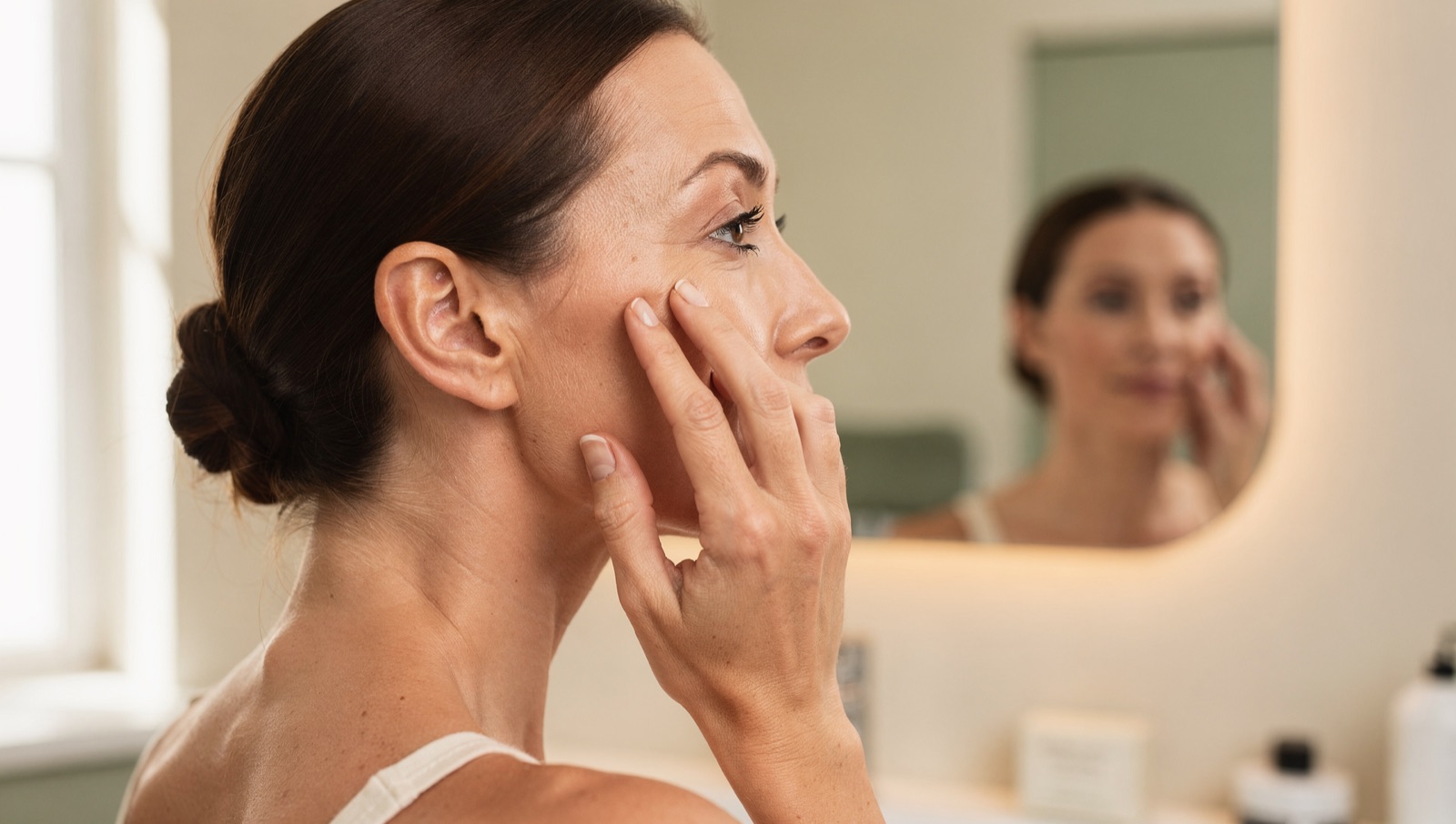
"Ozempic face" is the popular term for the hollow, deflated, or older look some people notice in their face after losing weight on a GLP-1 medication like semaglutide or tirzepatide. It isn't a separate side effect of the drug itself — it's what happens when you lose fat quickly, including the fat pads that give your face its shape. The good news: it's very treatable, and in many cases preventable. Here's what causes it, who's most at risk, and how Alpine Health & Wellness in Kalispell, MT helps patients keep their face looking like themselves while they lose weight.
Ozempic face describes facial changes that can follow significant weight loss, including:
Researchers have taken notice. A study published in 2025 found that facial volume loss is measurable with GLP-1 weight loss — one Vanderbilt analysis reported roughly 9% midface volume loss for every 10 kg (about 22 pounds) lost. And a Google Trends analysis covering June 2022 through June 2025 found that rising searches for "Ozempic face" tracked closely with rising searches for facial fillers — but not with surgical facelifts. In other words, most people are looking for non-surgical solutions.
Your face contains distinct fat compartments that give it contour and a youthful fullness. When you lose weight — from any method — those compartments shrink along with body fat. With GLP-1 medications, weight often comes off faster than skin can adapt, so the skin that once covered more volume doesn't snap back as quickly. Several factors make it more noticeable:
There's no single fix. The best results usually come from combining treatments that address three different problems: lost volume, lower skin quality, and laxity.
HA fillers like Restylane® restore lost volume in the cheeks, temples, under-eyes, and smile lines right away. Results are natural when placed conservatively and typically last 6–18 months depending on the area. Because HA filler is reversible, it's a good option while your weight is still changing. At Alpine Health & Wellness, facial filler is $700 per syringe.
Sculptra is a biostimulator: instead of filling space directly, it prompts your body to produce its own collagen over several months. It's well suited to the broad, overall volume loss that comes with GLP-1 weight loss, and results can last two years or more. Sculptra at Alpine is $1,200 for two vials; most people need a short series.
Alma OPUS uses fractional plasma energy to stimulate new collagen and elastin, improving crepey texture, fine lines, and tone. It pairs well with filler or Sculptra: volume treatments restore shape, while skin rejuvenation improves the quality of the skin covering it.
When volume drops, expression lines around the eyes and forehead can look deeper. Neuromodulators ($13/unit at Alpine) soften those dynamic lines and help the whole face look more rested. See Botox vs Laser: Which Is Best for Aging Skin? for how these compare.
There's no need to wait until you hit your goal weight. Many patients start with skin-quality treatments and Sculptra during weight loss, then add HA filler for fine-tuning once their weight stabilizes. Your injector will reassess as you go, since your face will continue to change while you're losing.
Current evidence points to the weight loss itself — especially rapid weight loss — rather than a unique effect of the medication. Anyone who loses a significant amount of weight quickly can see similar facial changes.
Skin can tighten somewhat over time, especially in younger patients, but lost fat volume usually doesn't return unless weight is regained. Most people who are bothered by it see the biggest improvement with volume restoration and collagen-stimulating treatments.
Yes. The same facial changes can happen with tirzepatide (Mounjaro, Zepbound), semaglutide (Ozempic, Wegovy), and other GLP-1 medications, including the new oral options. It's tied to how much and how fast you lose weight.
It depends on the area and how much volume you've lost. HA fillers give immediate, adjustable results; Sculptra builds collagen gradually for broader volume loss. Many patients benefit from both. A consultation is the best way to build a plan for your face.
Costs depend on how many areas are treated. At Alpine Health & Wellness, facial filler is $700 per syringe and Sculptra is $1,200 for two vials. CareCredit financing is available — see our payment plans.
Alpine Health & Wellness is one of the few places in the Flathead Valley where your GLP-1 weight loss and your aesthetic care happen under one roof. Elizabeth, our Nurse Practitioner, can plan your weight loss pace and your facial rejuvenation together, so you feel healthier and still recognize yourself in the mirror.
Call Alpine Health & Wellness in Kalispell, MT at 406-361-7421 or book a consultation online.
This article is for educational purposes only and is not medical advice. Aesthetic and weight loss treatments carry risks and individual results vary. Consult a qualified healthcare provider to determine which treatments are appropriate for you.


